Key Advantages of LMS for the Banking Sector
The Role of LMS in the Banking Sector
Improved Employee Training and Development with LMS
Advantages of Using an LMS in the Banking Sector
The Future of LMS in Transforming Banking Sector Training

The Role of LMS in the Banking Sector
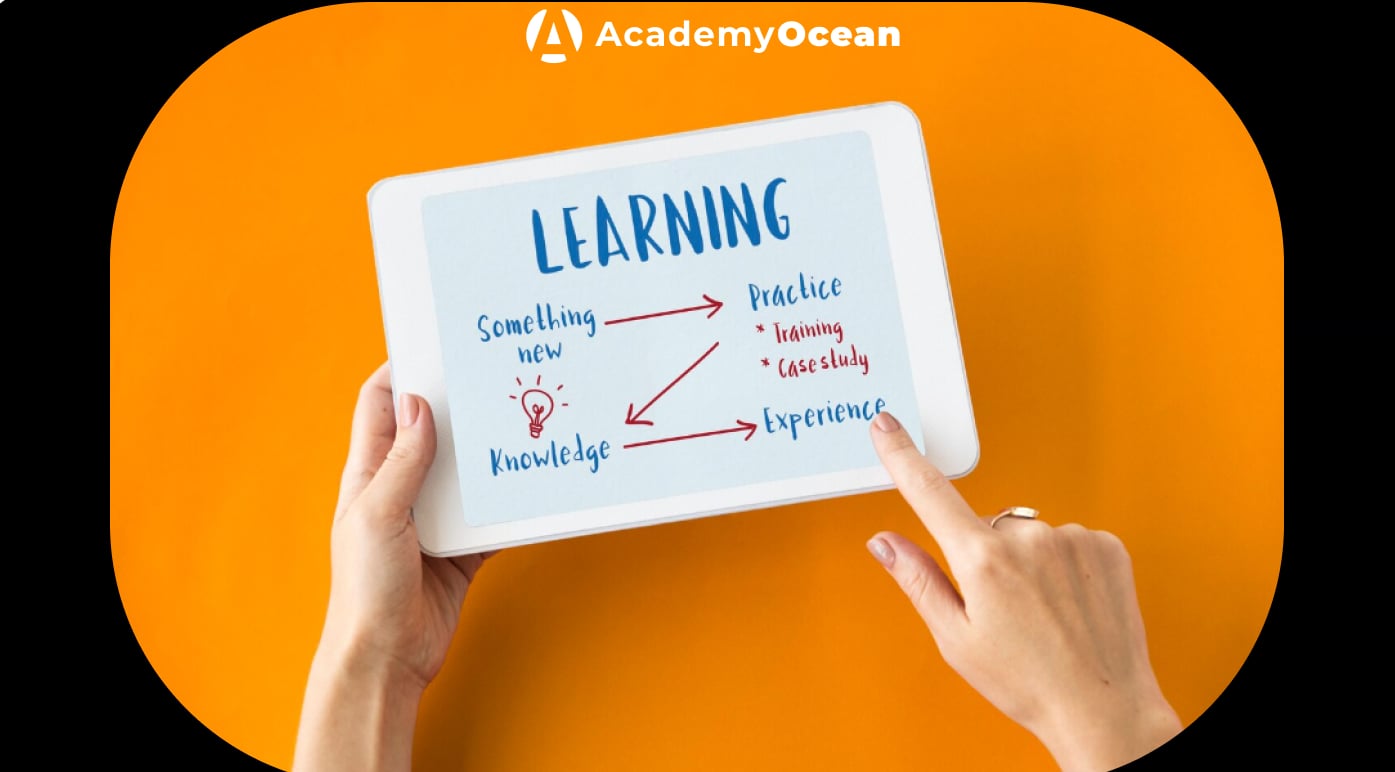
The challenge of modern banks is recurring: how to maintain their workforce sharp, compliant, and fully prepared to cope with everything from complex regulations to changing customer needs. A learning management system provides a workable solution. This tech platform integrates all training activities, thus making it easier for banks to recruit new employees , refresh existing staff's knowledge on compliance, and create specialized skills in different areas. Rather than managing spreadsheets, physical classrooms, and dispersed resources, organizations can now bring together all of their educational infrastructure at one user-friendly hub.
The transition to structured digital platforms signals the trend of financial institutions' operational changes. The conventional methods of training, like week-long seminars and printed manuals, have become outdated and are unable to cope with the fast pace of regulatory updates or the wide geographic coverage of modern banking operations. Hence, organizations require something that is more flexible, measurable, and capable of being responsive to the individual learning needs.
Improved Employee Training and Development with LMS
Banks are in a position where power and knowledge can turn into mistakes that cost a lot. A simple compliance omission could cause the company to be fined. A customer service rep not up to date on the new products might refer the customer to a competitor's product and thus lose the sale. By implementing an LMS across the organization, these risks have been significantly reduced through the creation of standard and easily traceable learning experiences.
Think about a product launch in a local bank's scenario. Different training materials would be sent to branch managers, resulting in varying customer messaging at each branch. If there is a centralized system, then everyone will see the same content that has been updated at the same time. The system keeps records of the modules that each has completed, finds knowledge gaps through tests, and sends reminders to the staff about the necessary refresher courses automatically.
The technology has also provided the learning styles of the employees and thus supports them. While some people consider videos as a good way to learn, others might like to be reading or would rather be interacting with the system through simulations. The new platforms are coming along in all these ways of learning, not requiring each one of the formats to have its own separate infrastructure. This is especially advantageous for banks that have a mixed workforce with different ages and education levels.
Advantages of Using an LMS in the Banking Sector
Centralized Learning Platform
Having training materials managed across dozens and hundreds of sites is just a slow administrative fever. Centralizing these materials will eliminate such frustrating coordination problems. On such a platform, training managers upload the course materials once, and they become readily available to all employees needing them. As they need to be updated, these updates take place in real time: as regulators announce new requirements, compliance teams can push updated modules immediately, rather than printing revised manuals and sending them to branch locations.
This is not just about storage; it is about a single source of truth for certifications and other records of completion and skill-based assessment. HR could check right away if a specific employee has received the anti-money laundering training or any refreshers. Branch managers can check the competencies of their teams prior to designating specialized tasks.
Improved Training Material and Process
Paper-based methods are pristine until someone invests time and money in an overhaul. Digital platforms allow seamless and continuous improvement for the training program. The instructional designers look at completion rates and quiz scores through feedback and analyze which modules work well and which need improvement.
If 40% of the employees seem to be struggling with an assessment question, that presents a good opportunity to clarify the underlying concept.
Multimedia explanations will help with complex issues the banking industry deals with, such as mortgage underwriting and cryptocurrency regulations. Instead of inundating trainees with text documents that are fit to be published, trainers can use demonstration videos to show what they mean, branch scenarios simulating real customer interaction, and knowledge checks with real-time feedback. This combination of formats will help in retaining concepts more than traditional lecture styles.
Ensuring Compliance and Regulatory Training
The financial services industry is under intense scrutiny. Federal and state regulators have specific requirements for training, and failure to document completion can result in fines. A robust platform automatically tracks who needs what certifications, sends reminders ahead of deadlines, and produces audit-ready reports proving the organization is in compliance.
Regulations change quite frequently.
When the Consumer Financial Protection Bureau comes up with new guidance, it has to be trained on by the banks. A central command system allows the compliance teams to put together updated modules, assign them to the relevant personnel, and keep track of completion within days instead of months.
The platform is also storing historical records of exactly when each employee completed each version of training, which will protect the institution during regulatory scrutiny.
Tracking and Reporting
The executives need visibility on the capabilities of the organization.
- How many relationship managers have completed advanced lending certification?
- Which branches have the highest attainment rates for compliance training?
- Where does the organization need to channel its additional training resources?
- The full platform should address all these questions through dashboard analytics and customizable reports.
This tracking function supports individual development and the overall organizational strategy. Through learning activities and assessment scores, managers can identify high-potential employees; HR teams can thereby identify departments where training completions are not meeting expectations. The collected data helps financial institutions make evidence-based decisions on talent development instead of relying on gut feeling.
Cost-Effectiveness
The cost of traditional training can be mind-boggling: for instructor fees, renting a venue, travel, and loss of productivity during off-site sessions attended by employees. When properly deployed, an LMS cuts costs significantly. Though a one-time cost should be incurred for the initial set-up, one would almost immediately see how cost-effective this venture would be.
For example, one instructor can record a module once, and thousands of employees can access it repeatedly without additional expenses.
More often than not, these savings may go beyond just direct. Employees usually complete training in between workflow interruptions as opposed to taking time off for training classes. The organizations benefited from less travel, less cost for venues, and an option to update materials without printing thousands of new pages. For organizations with hundreds or thousands of employees, these savings can translate to significant budget relief.

Based on Human Needs
No two bankers require the same kind of training. What tellers need for their job is different from what mortgage loan officers require, and that is different from what investment advisors require. An advanced platform allows administrators to tailor-make such individualized learning pathways according to roles, departments, or trajectories for career paths.
New tellers may have the sequence of and cash handling, customer service protocols, and fraud detection training, whereas relationship managers may go through business lending, financial analysis, and relationship management.
Such individual tracking of progress is made possible. If an employee masters some topics based on assessment tests, the system would skip parts of courses that the learner has already completed and advance him or her to higher-level content.
An individual might also be guided to additional materials or other explanation types by the program if experiencing difficulties with particular ideas. There is regard for individual learning speed while performing standard work with this approach.
Scalability
Growing banks are plagued with the same problems: how to maintain the quality of training while the operations are expanding. Opening ten new branches should not require increasing the training departments in the same proportion.
A platform that is sturdy has the scalability that none of the traditional methods can offer. Whether it is five new hires or five hundred, the infrastructure is always the same.
No reprinting of course materials. Instructors do not need to travel to new areas. The only task the system performs is to add new user accounts and assign them the appropriate learning paths.
This scalability proves to be very important during mergers and acquisitions. Standardization of training relevant to the combined organization becomes imperative once one bank absorbs another. A centralized platform would allow the acquiring institution to quickly extend its training programs to the newly acquired employee group and facilitate cultural integration and operational consistency.
Improved Employee Engagement
Mandatory coaching usually feels burdensome. Modern platforms can add engaging components to learning. Gamification elements--progress badges, leaderboards, and completion certificates--play into natural competitive instincts. Social-learning tools enable employees to discuss their challenges, insights, and learn from their peers across the organization.
Interactive elements turn passive consumption of content into active learning experiences. Instead of reading about difficult situations when dealing with customers, employees go through branching scenarios where their decisions create different outcomes. Such hands-on simulation is far superior in building these skills than any theoretical lecture.
The platform can supplement microlearning - broad topics, concise modules where employees are supposed to spend 5 or 10 minutes, making it less burdensome and realistic in a packed working day. This kind of modern e-learning focuses on stronger engagement while respecting employees' time with a significant educational experience.
The Future of LMS in Transforming Banking Sector Training
Changes in banking education exemplify the wider changes in how institutions are transforming their practices in workforce development. Such centralized platforms provide infrastructure that meets the future pace of rapid change while also maintaining accountability and cost control without engaging in formal classroom training. Infrequent static training sessions that no longer serve organizations whose business operates within rapidly evolving regulatory environments and geographies.
Ultimate advancement for such systems will likely involve greater sophistication of the features.
For example, artificial intelligence may personalize learning paths according to individual performance patterns, virtual reality might render a practice in high-stakes 'customer' situations without real-life consequences, and analytics will become increasingly predictive and will be able to determine looming skills gaps before they affect operations.
On the contrary, such banks will see the platforms as strategic assets to not only aid in organizational efficiency but also in competitive advantage. Well-trained employees offer better experiences, realize fewer costly mistakes, and adapt quickly to market changes. Indeed, the training advantage that these institutions would have would be built over years of development; technology has simply matured enough that wielding this advantage positions an institution well for the new challenges posed by our increasingly complex financial landscape.
