
We thank
to our informational partners!


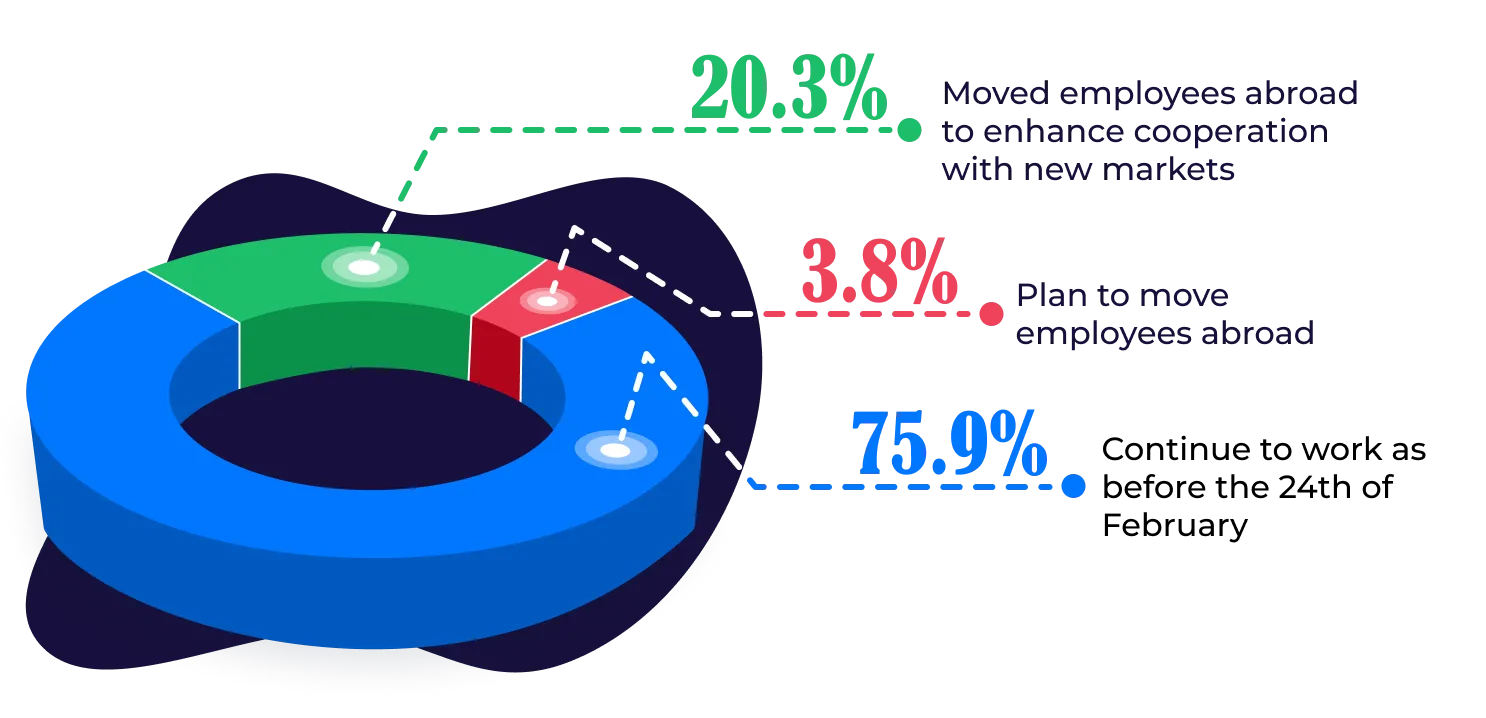
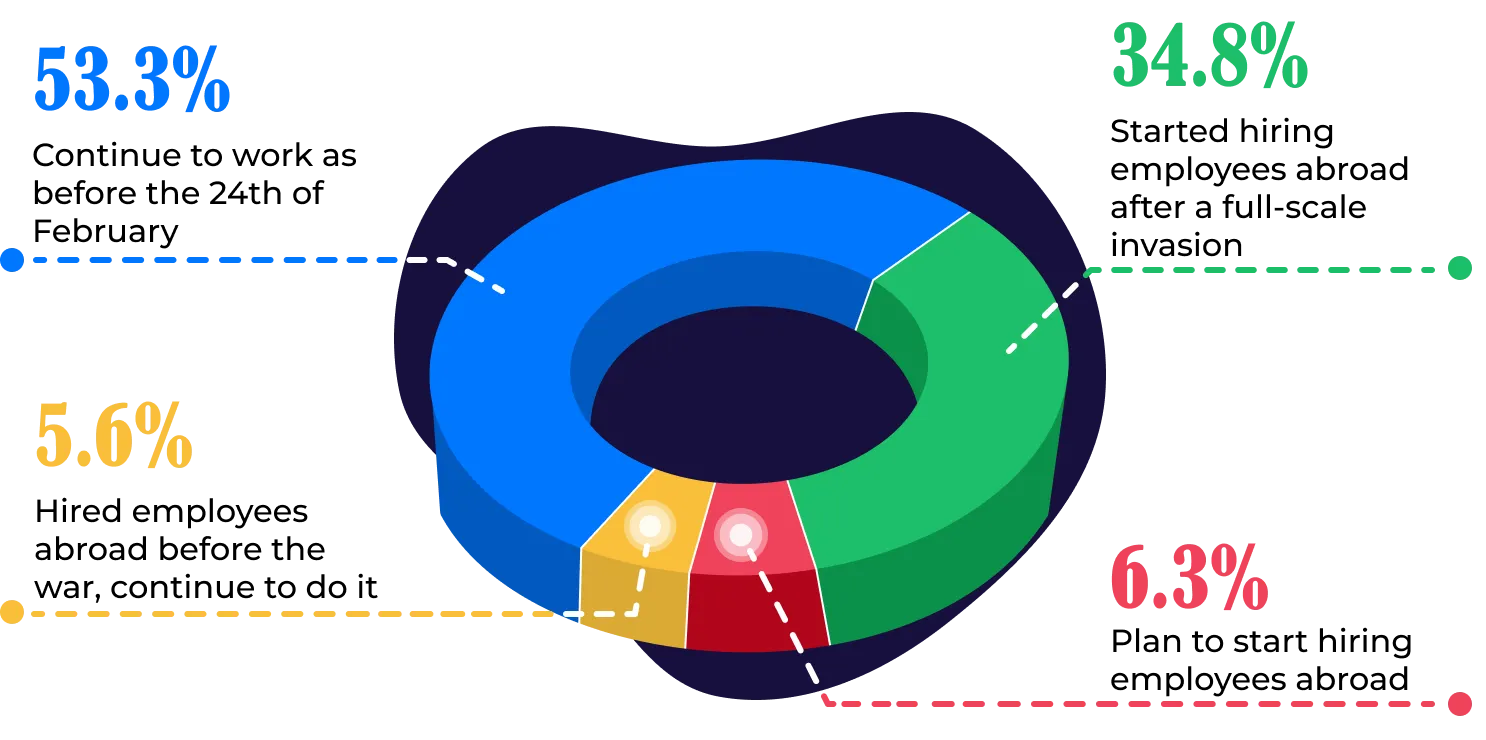
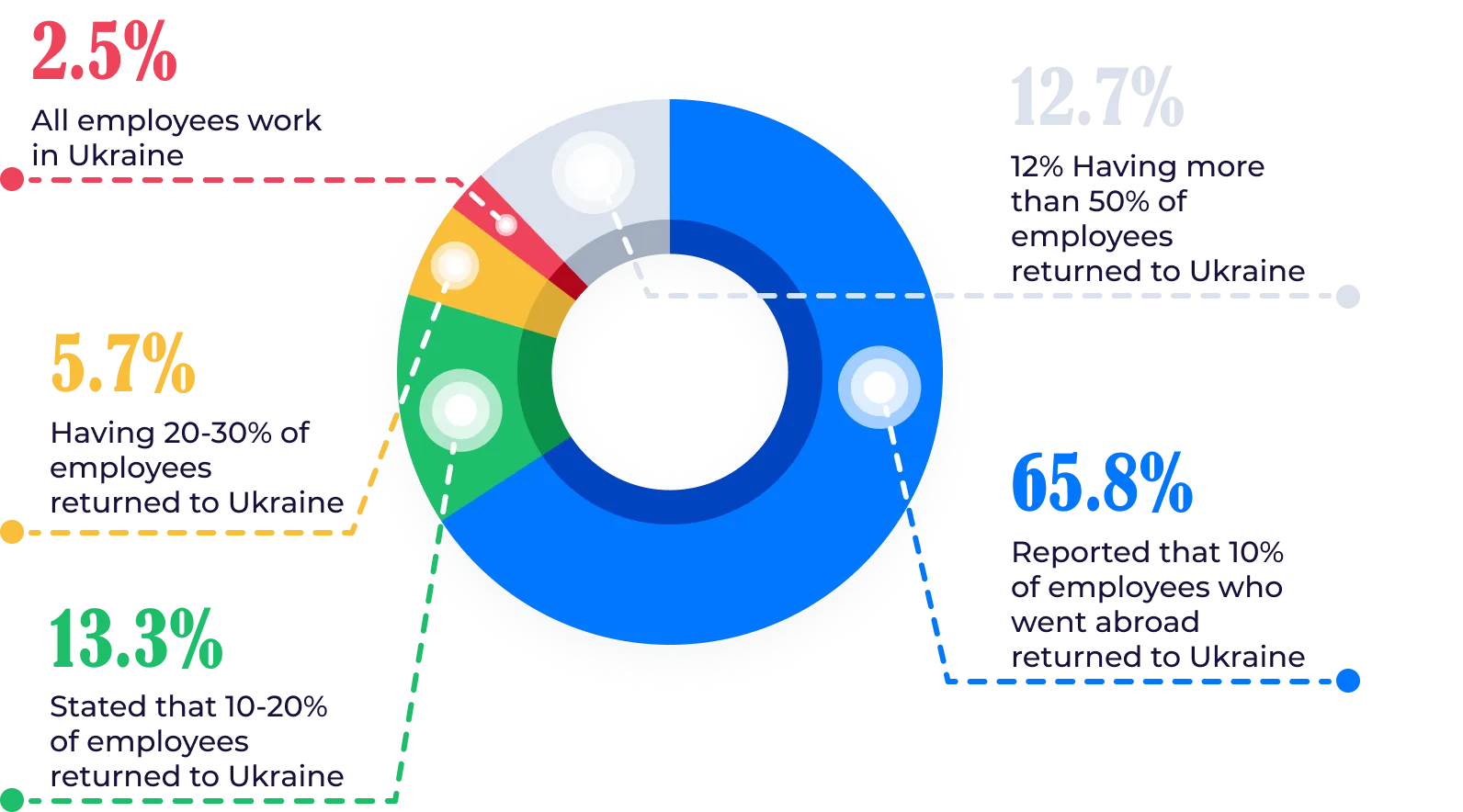
As a global company that communicates with HR and L&D experts worldwide, international colleagues often ask us about the work of HR and L&D during wartime and business in general. So, AcademyOcean has surveyed 160 Ukrainian HR and L&D to show how they deal during the war.
At first glance, the only thing the Ukrainian business has been doing for a year is trying to survive. At the same time, the survey results showed the opposite.
Ukrainian firms opened new offices, created new products, and hired more people during the war. They started investing in cybersecurity and employee well-being. Moreover, women started leading firms in the most challenging times for their companies. Back on February 24, all this seemed fantastic.
160 Companies with the main office in Kyiv.
36% - HR Director; 64% - other HR profession.
48.7% of surveyed companies have 51-500 employees, 24.1% - 500-2000 employees, and 22.2% - 1-50 employees.


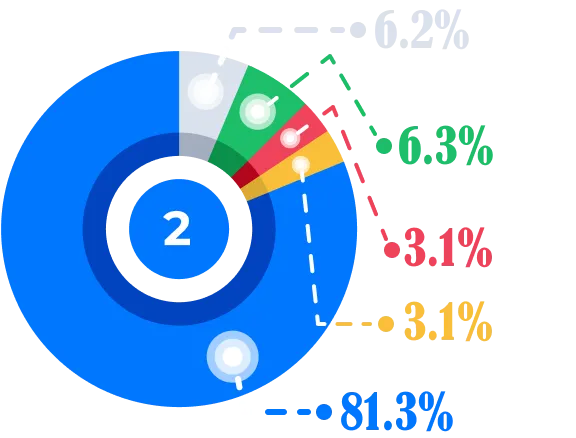
A team needs more time to complete task
A team closes the tasks by the set deadlines
At the beginning, the team needed more time, but now they complete tasks as before the war
Companies where employees continue to work
Companies where employees stop working
Employees work 50/50
Employees go to the office with sustained electricity
Companies provide coworking for employees
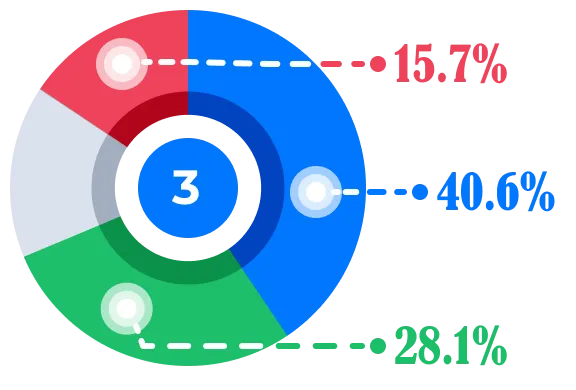
Have fully equipped offices, or their workers are fully autonomous to work from home
Ask employees to work from co-working
Fully or partially cover co-working spaces
Other 15.6%

96.2% of companies agree that the war affected the mental state of employeesс

94.9% of companies agree that the mental state of employees affects the company's results
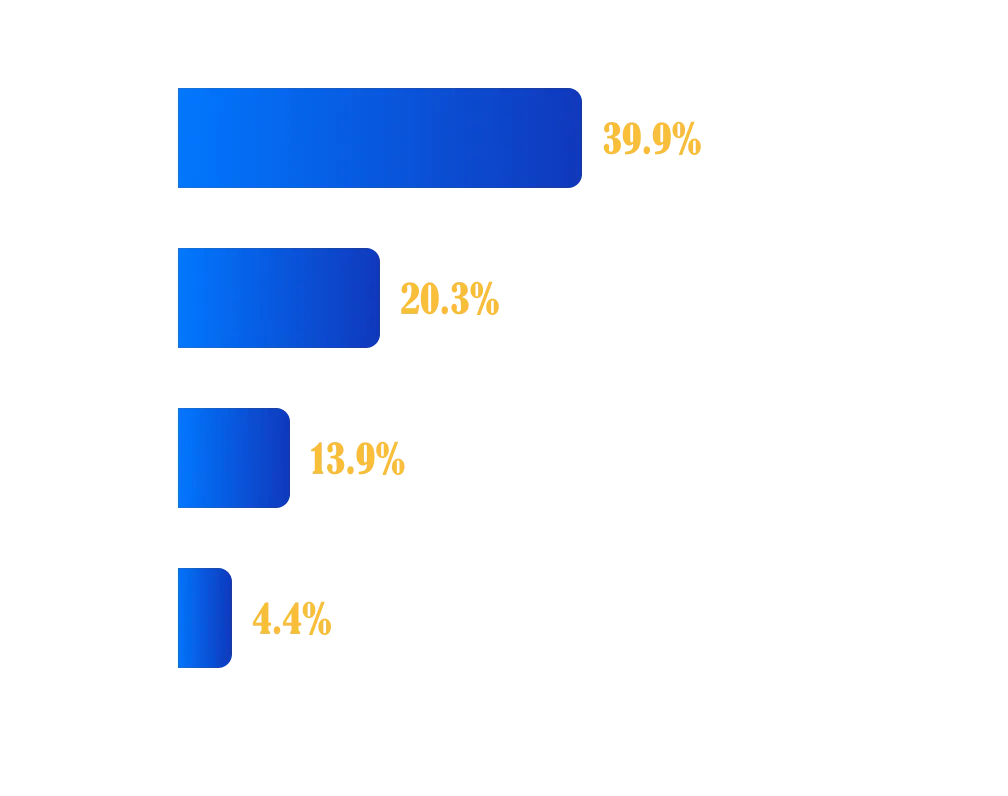
39.9% - noticed a deterioration in mental health among employees in the 27-41 age group;
20.3% - noticed a deterioration in mental health among employees aged 20-26;
13.9% - noticed a deterioration in mental health among employees aged 42-57;
4.4% - noticed a deterioration in mental health among employees aged 58-65;
39.2% - did not notice the deterioration of mental health among employees of a specific age group.
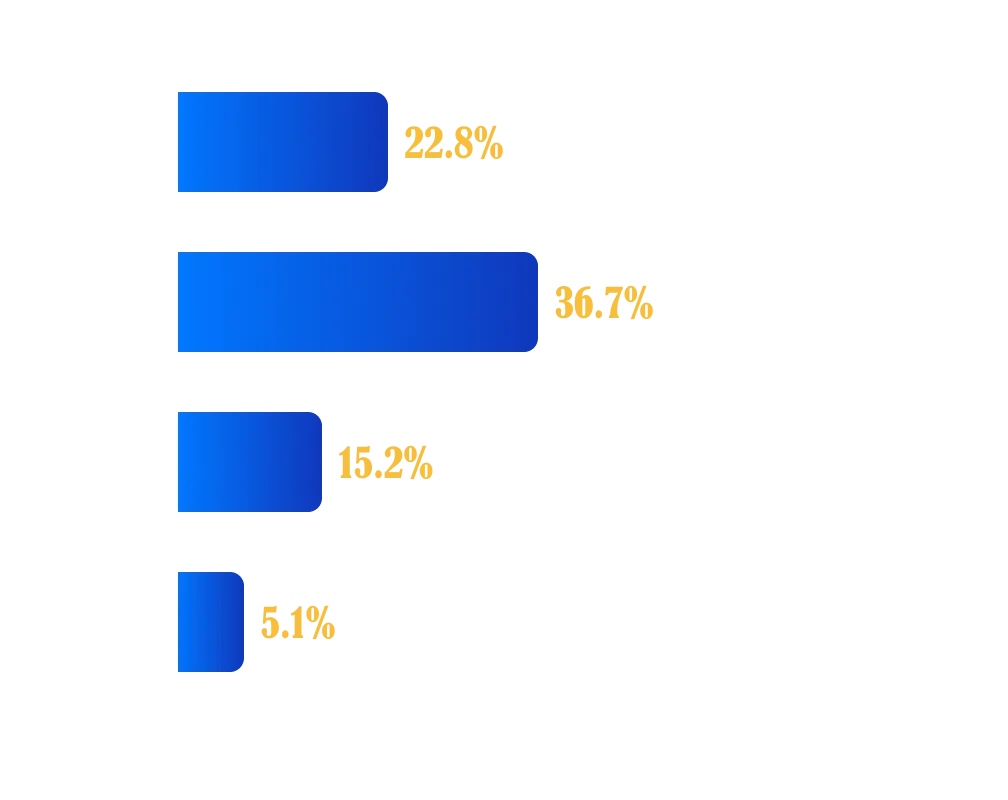
36.7% - noticed a deterioration in productivity among employees aged 27-41 after the start of a full-scale invasion;
22.8% - noticed a deterioration in productivity among employees aged 20-26;
15.2% - noticed a deterioration in productivity among workers aged 42-57;
5.1% - noticed a deterioration in productivity among workers aged 58-65.
"Now it seems critically important to support employers and those businesses that remain, as well as the investment climate so that companies do not leave Ukraine. And new ones are not afraid to do business here. It helps the development of international partnerships and the resolution of issues with the tax residency of those who have left (I mean that citizens under temporary protection remain tax residents of Ukraine, which will significantly increase the likelihood of their further cooperation with Ukrainian companies and return after victory)."

"To work on the promotion of the company's HR brand. Talk about the company's social responsibility and guarantees for employees, regardless of the situation in the country. To highlight the successes and achievements of the company during the war period by promoting this information in the company's social media and professional platforms."

"Ukrainians should become flexible; those who have not yet implemented software for automating business processes, managing teams and projects-need to implement it as soon as possible. The organization of the work of remote teams must be well-configured. Entering new markets or expanding influence in other countries is also necessary for further functioning. Our efforts will support the country's economy now and will give a colossal impetus to development in the future."

"Be flexible in creating working conditions, support employees in creating a remote workplace, personalize the approach, make decisions quickly in conditions of rapid changes."

"In Ukraine, there are fewer formalities, as the processes are sufficiently flexible, HR’s are open to innovation and experimentation, and they respond sensitively to changes in the business and social environment. In general, they look at it from several points of view - the effectiveness of the team, the potential of newcomers and the forecast of their future development in the company, psychological support, as support is one of the efficiency factors."

"Thanks to international cooperation and access to information, as well as flexibility and openness to innovation, we quickly adopt the best of the world experience. So now we have a lot in common, but there are still differences. Among our disadvantages, Ukrainian personnel legislation and record keeping still lag far behind the needs of modern business. So we are very much looking forward to further improvements here. Also, we still have many problems regarding gender roles, ageism, and non-inclusiveness that we want to overcome. And from the advantages, HR in Ukraine feels much less legal and judicial pressure, which allows us to shift our focus from policies and instructions to people and process efficiency. And we are always ready for calls and prompt responses. Therefore, many of our processes take place much faster, such as hiring, training, or promotion."
Still looking for the right platform to train and onboard employees?AcademyOcean - with an industry-leading ease of use rating of 9.8 (g2.com), focused on personalization and learning measurement, will make corporate training easy and effective.
Order a free product demo, and our specialists will show you results you can achieve by training employees with AcademyOcean.